In this piece, I want to show you how cacao should be handled from start to finish, to keep its magic intact. After years of experience with this ancestral medicine, countless trainings, and my own work as a facilitator, I’ve learned to spot the real criteria that make all the difference.
The cacao industry has a dark side that isn’t always well known. The vast majority of commercial chocolate brands on shelves today use highly processed cacao beans, often from GMO varieties, grown and harvested by workers, often children, paid terribly little and living in extreme poverty.
That’s exactly why it matters to know where your cacao comes from, and to choose it consciously.
The Fundamental Difference: Ceremonial vs. Industrial
Ceremonial cacao goes through minimal processing, using traditional production methods rooted in Maya civilization. Without that traditional process, cacao paste wouldn’t retain the beneficial properties of its beans, and it wouldn’t produce that felt sensation in the body. These are exactly the criteria that make your cacao ceremonial grade.
True ceremonial cacao makes up less than 1% of the global cacao market. That rarity is also why quality cacao costs more than supermarket chocolate, around €45 for 450g.
The ancient civilizations of Latin America were closely tied to the land; they lived in harmony with nature and honored the environment around them. Fluent in the language of the earth, they asked permission before harvesting and hunting, and regularly offered prayers in its honor.
Cacao originates from Mexico, Central America, and northern South America (Colombia, Ecuador, Venezuela, Brazil, Guyana, Suriname, and French Guiana). Ceremonial-grade cacao paste carries far more beneficial compounds, because it’s made from a specific heirloom bean variety: Criollo.
The 6 Essential Criteria of Real Sacred Cacao
1. Origin and Genetics: Favor Heirloom Cacao
Varieties to look for:
Criollo: a rare, ancestral variety, and the most sought-after. Criollo, meaning “native” in Spanish, is the closest living relative of South America’s original cacao trees, and it’s also considered the finest cacao there is. More fragile than other varieties, it’s especially vulnerable to pests and disease.
Nacional: an Ecuadorian variety with a unique flavor. This legendary variety traces its genetic lineage back to the very first cacao trees domesticated by humans, around 5,300 years ago. After reaching worldwide fame in the 19th century, it nearly disappeared in the 20th. As recently as 2009, pure Nacional cacao was believed to be extinct. In the Piedra de Plata valley, one of the last surviving groves of 100% pure Nacional cacao was found, what geneticists now call Ancient Nacional. Known for its delicious floral notes and bright aromatics, it makes up just 1% of Ecuador’s cacao production. This variety carries a high vibration and a complex aromatic profile, grown from old cacao trees still standing in the province of Manabí, along the banks of the Portoviejo river, some of them over a hundred years old.
Trinitario: a balanced hybrid variety. Trinitario is a cross between Criollo and Forastero, originally widely grown in Trinidad, hence the name, and now cultivated across many regions, including Southeast Asia. Like Forastero, Trinitario cacao is hardier than Criollo, making it better suited to large-scale production.
Preferred regions of origin: Ecuador, Peru, Guatemala, Venezuela, Bolivia. These regions still preserve traditional methods and heirloom varieties.
To avoid entirely:
Industrial hybrid varieties (commercial Forastero)
West African cacao grown in intensive monoculture
Any cacao mentioning GMOs or genetic modification
2. Agroforestry vs. Plantation: The Environment Changes Everything
Cacao is a tree that thrives under agroforestry. When you choose cacao from an industrial plantation, its quality will drop considerably compared to a small farm with rich soil and a true agroforestry system.
Agroforestry (favor this):
Cacao trees grown under natural canopy
Preserved biodiversity
Rich, living soil
A balanced ecosystem
Respect for natural cycles
Industrial plantation (avoid this):
Intensive monoculture
Deforestation
Depleted soil
Heavy pesticide use
Exploitation of local communities
3. The Traditional Production Process
It takes about five to six months for the fruit to ripen before it can be removed from the tree with a machete, yes, it doesn’t fall on its own. The fruit, a large, beautifully colored pod, is split open to reveal big beans wrapped in white flesh.
Small-batch fermentation: the beans ferment for several days in wooden crates, covered with banana leaves. This fermentation turns their sharp bitterness into complex notes, and develops cacao’s psychoactive properties.
Sun drying: they’re then dried in the sun, never in industrial ovens, which destroy nutrients.
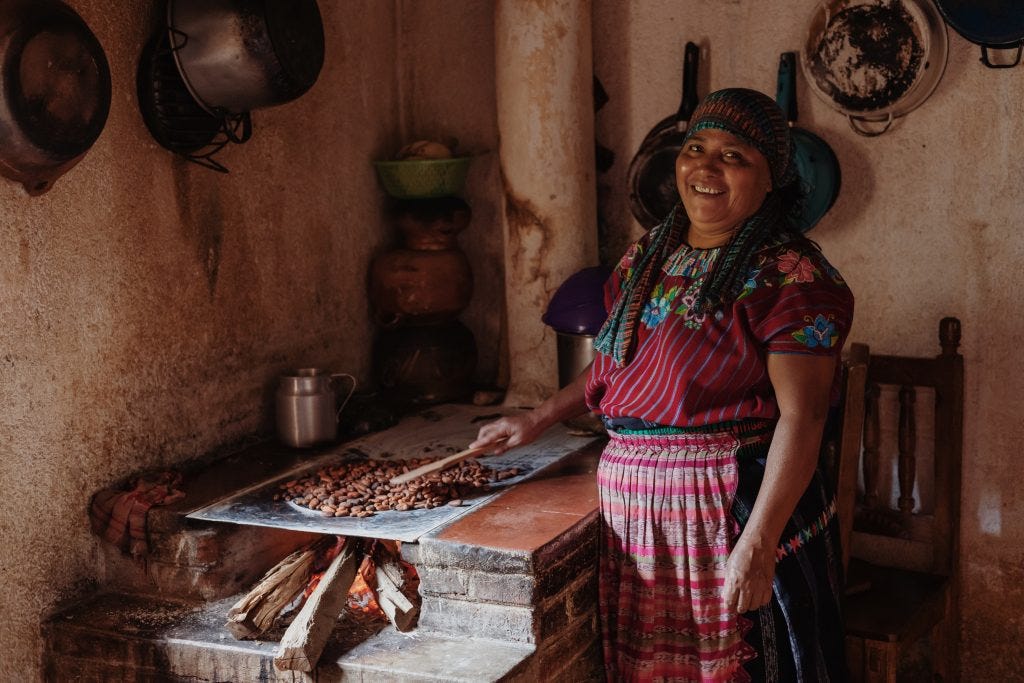
Gentle roasting: roasted over small wood fires or in home ovens, at low temperature, to preserve the active compounds.
Hand-shelling: shelled by hand as well, always by women, in keeping with tradition.
Stone grinding: finally, the bare beans are turned into a thick paste, ground the traditional way on a hot volcanic stone, accompanied by chanting, incense, and prayer.
Cacao is a tree that thrives in agroforestry, when you choose cacao from a plantation, the quality of the cacao will likely decline compared to a small farm with thriving soil and an agroforestry system.
4. Fermentation: The Secret Behind Taste and Properties
Your cacao’s flavor depends on several factors, but the three main ones are the soil it grows in, the fermentation process, and the roast. Large cacao companies often over-roast their beans, which changes the nutritional value of your cacao.
Traditional fermentation (what to look for):
Small-batch fermentation in wooden crates
Covered with banana or maxán leaves
A controlled duration of 3–7 days, depending on the variety
Develops flavor and activates the psychoactive compounds
Industrial fermentation (to avoid):
Large-scale fermentation, often skipped entirely
A rushed process that destroys these properties
No quality control over the flavor profile
5. Form: Paste vs. Powder
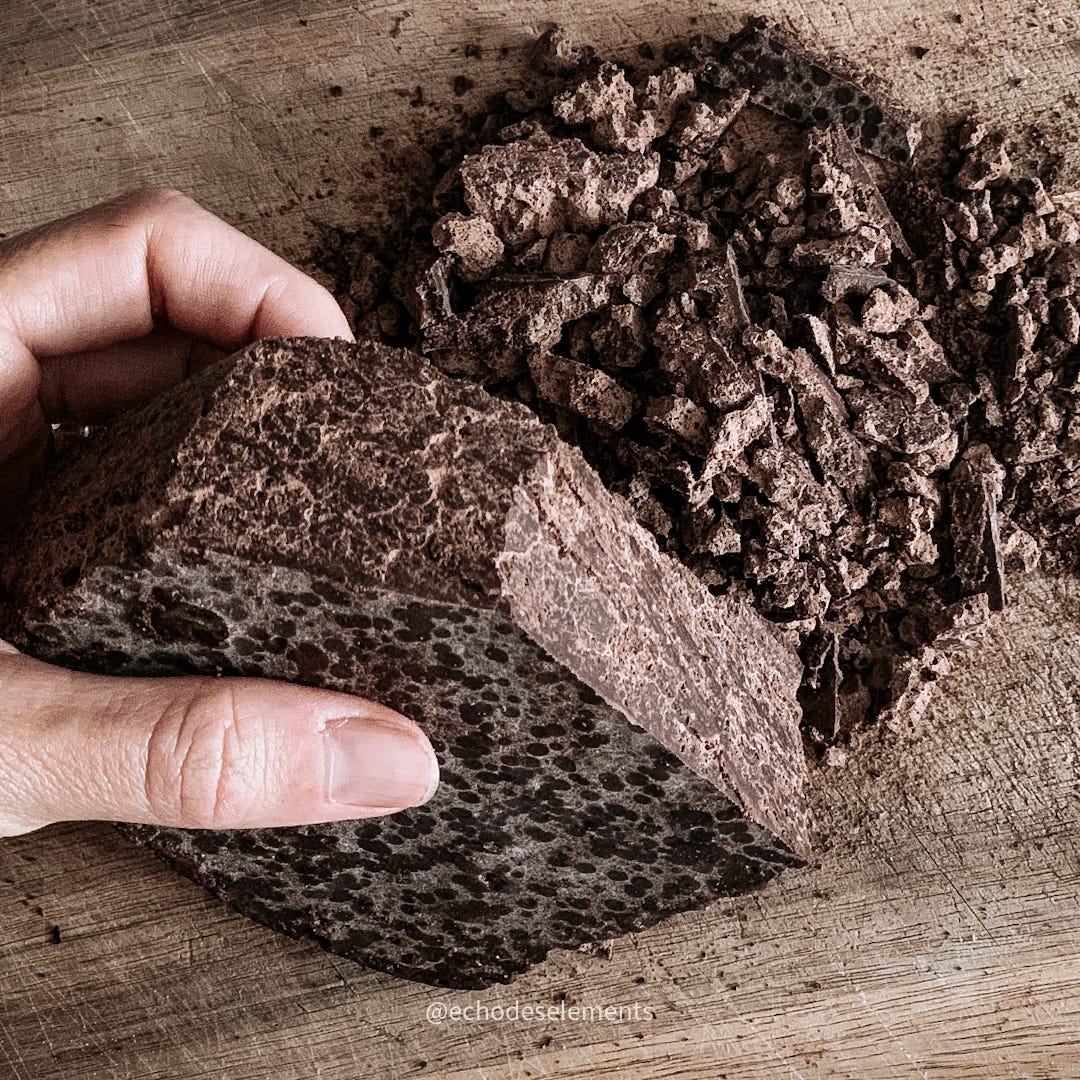
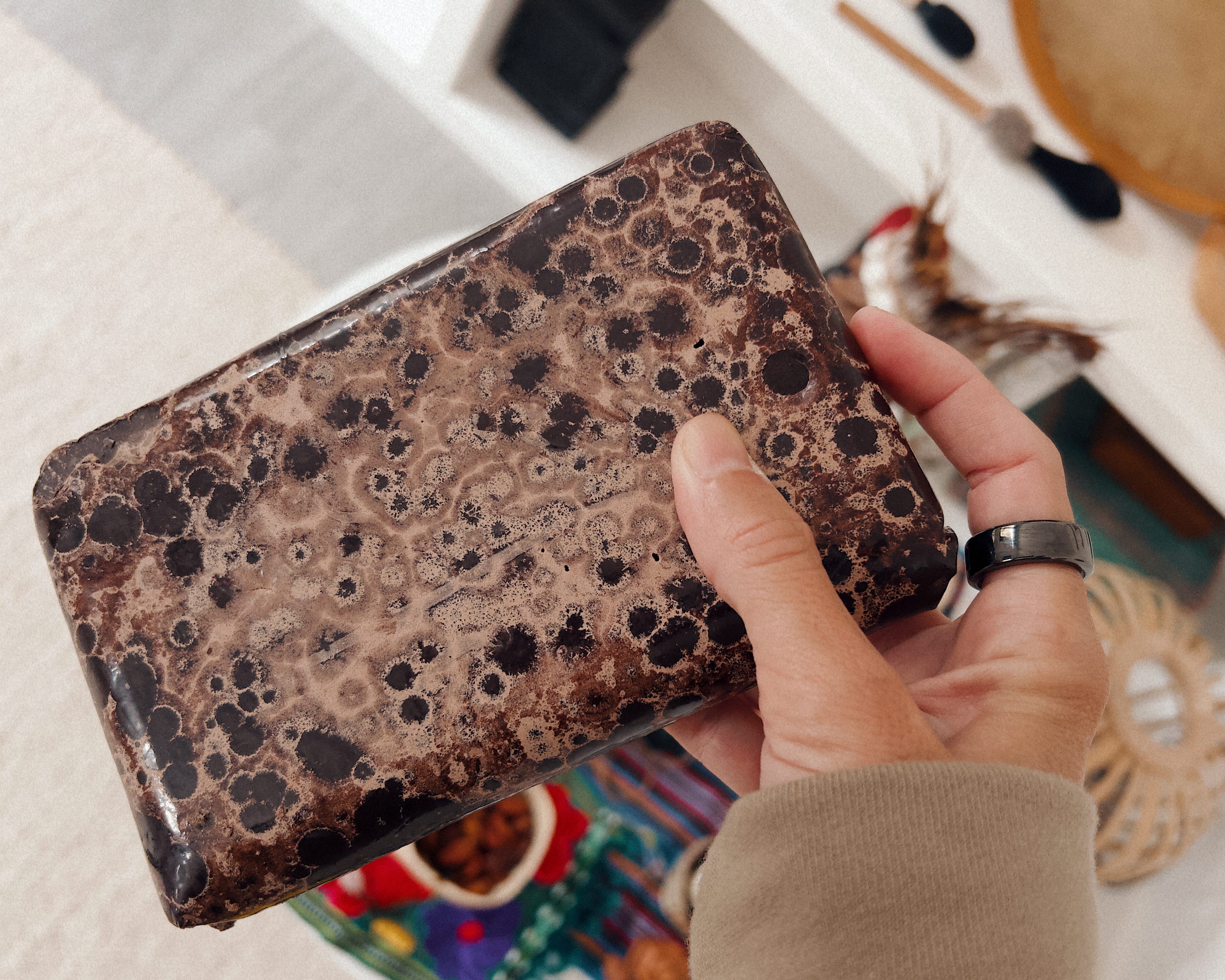
Cacao paste, which hardens into a block as it cools (recommended for ceremony): the difference between powder and paste is that the butter stays present in the paste. Cacao butter is an incredible carrier, since it improves how well the body absorbs all the remarkable nutrients sacred cacao offers. For medicinal use, keeping the butter intact matters.
Cacao powder (fine for everyday use): still a great addition to your kitchen, but it carries none of cacao’s ceremonial or energetic strength.
A block of sacred cacao from Keith Wilson, recognizable by its characteristic formations of cacao butter. Origin: Guatemala.
6. Certification and Ethical Traceability
Sacred cacao is an organic product. The producers and guardians of sacred cacao never use pesticides or synthetic fertilizers, and never modify it genetically. Doing so would make it unfit for ceremonial use, and would go against their ancestral teachings.
Certifications to look for:
Certified organic farming
Fair Trade
Rainforest Alliance, for agroforestry
Direct producer certification
Traceability you shouldn’t skip:
Name of the farm or cooperative
Precise region of production
Harvest year
The producer’s own story
Detailed farming practices
Authentic ceremonial cacao can’t cost €10 a kilo. The traditional process, small-batch production, and fair trade all come at a real cost. Be wary of prices that seem too low, they often hide industrial production in disguise.
Warning Signs to Watch For
Suspicious pricing: “ceremonial cacao” with no precise origin, exaggerated health claims with no evidence behind them.
Misleading marketing: modern packaging with no producer story attached, blends with added sugar or other additives.
Questionable origins: West African cacao grown in monoculture, countries with no ceremonial cacao tradition, vague or unmentioned origin, blends of multiple, unspecified sources.
As a rule, people who genuinely work with this medicine are proud to share where it comes from, to highlight the land it’s grown on and the people behind the process. That information tends to come freely. If it doesn’t, ask.
On origin: What’s the exact farm? Which variety, Trinitario, Criollo, Nacional? Does the producer practice agroforestry? Is there organic certification?
On process: How does fermentation work? What’s the drying method? What temperature is the cacao roasted at? Is grinding done on a traditional stone, or mechanically?
On ethics: What percentage goes directly to the producer? Are working conditions fair? Is there a positive social impact on the community? Is the environment respected?
Getting Your Cacao Directly From Me
I don't sell my cacao online, or ship it. If you'd like to try it, the best way is to join one of my ceremonies, in person, where I hand it to you myself, the same way it's always been passed on, hand to hand.
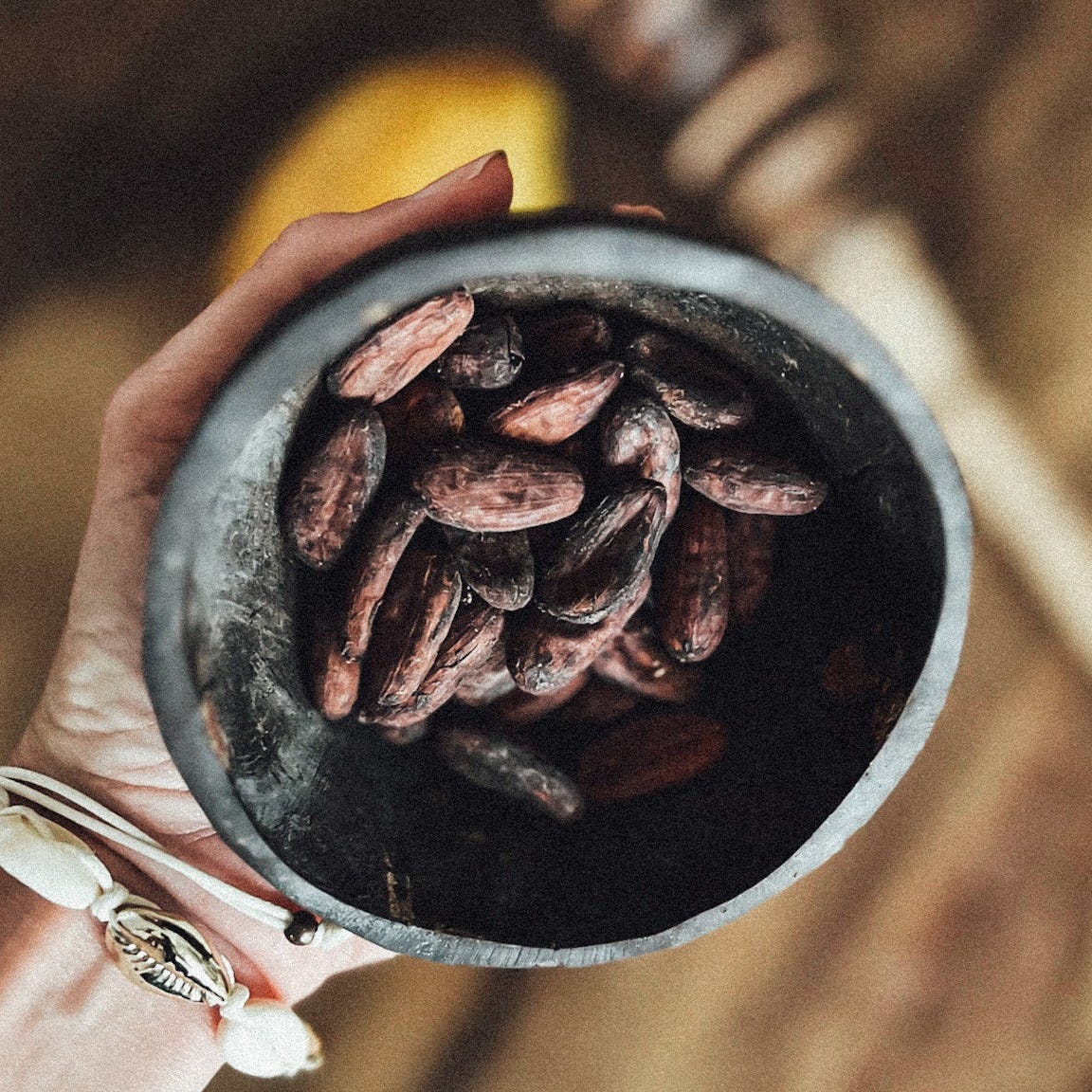
An indigenous myth tells that whenever the balance between humans and nature is threatened, cacao comes out of the rainforest to reopen the human heart, and bring harmony back to Earth.
A Final Word
Choosing your sacred cacao is more than a purchase. It’s a conscious act, one that honors the guardians of this ancient tradition, supports respectful farming practices, and guarantees you a genuine experience with this extraordinary medicine.
I pray that cacao, and our ancestors, keep breathing these values back into us, through every cup we drink, and every dream we have.
Take the time to choose well, ask the right questions, and trust what you feel. Mama Cacao will guide you toward what’s right for you. 🤎

It’s with genuine respect and deep gratitude toward the guardians of this ancestral wisdom that I share this guide with you. It has never mattered more to raise awareness of, and support, the indigenous communities who have shared and protected this medicine for thousands of years. May we honor them with every gram of cacao we consciously choose.
If this post resonated with you, nearby or planning a trip to Portugal, follow me on Instagram, where I share ceremonies and updates from the land. Further away, you’ll find me on Insight Timer instead, with meditations, chants, and cacao journeys wherever you are in the world.
Johanna